

Why Prime/Digital vs Conventional RT
Digital vs Conventional Count the darkroom, and digital wins at every pipe size.
Radiographic time to a usable image per weld, by pipe diameter — film's clock does not stop at exposure, and once development is counted digital wins at every size.
| Pipe | Digital (total) | Film exposure | Film development | Film total |
|---|---|---|---|---|
| 10"–12" | 1 min | 3 min | 45 min | 48 min |
| 16" | 5 min | 3–5 min | 45 min | 48–50 min |
| 20" | 8 min | 5–10 min | 45 min | 50–55 min |
| 24" | 10 min | 8–12 min | 45 min | 53–57 min |
| 30" | 12 min | 12–16 min | 45 min | 57–61 min |
Film total = exposure + 45 minutes of development. Development is counted once per exposure; where several films are processed together in one batch, the development time per exposure is lower.
+45min
Film development
added to every conventional exposure — the image isn’t usable until it’s out of the darkroom
Time to a usable image — 24" pipe example
Every conventional exposure adds 45 minutes of film development before the image is usable — digital has no development step. Counted in, digital is faster at every pipe size. On a representative 24" weld that's 53–57 minutes total versus 10 minutes read on screen for digital — over 5× faster to an accept/repair decision (24" example, including film development), and the crew never stops for a darkroom.
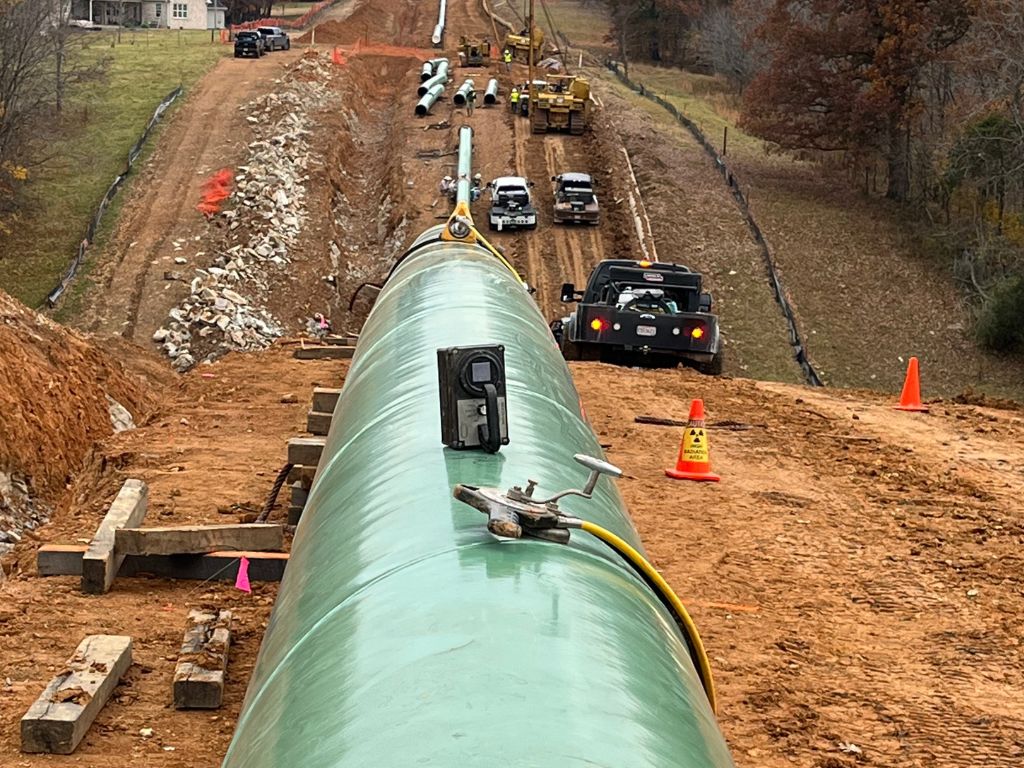
Digital Advantage
Digital radiography transforms how we inspect pipelines. Faster results, better quality, and significant cost savings.
- Faster results — no film development step
- Higher image quality and resolution
- Immediate feedback on weld quality
- No need for film processing or chemicals
- Easier storage, sharing, and archiving of data
- Enhanced defect detection with image manipulation tools
- Lower long-term costs compared to film
- Streamlined reporting and traceability
- Less downtime on turnarounds and outages
- Lower source strength and smaller exclusion boundaries — less radiation exposure for crews and the public
Related resources
Need radiography, ultrasonics, or both?
We run RT, DR and CR crews alongside AUT and PAUT. Contact us to discuss your project.